The Measurements Of Eratosthenes

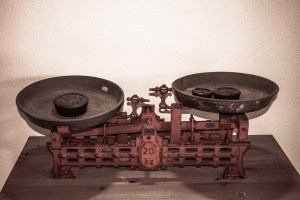
Eratosthenes of Cyrene (c. 276 B.C.–c. 195 B.C.) is justly famous for his ingenious method of calculating the circumference of the earth.  What is less widely known is the fact that he made other contributions to the history of mathematics, some of which we will discuss here.

Continue reading

The Alexandrian Library: Dissipation Through Neglect And Apathy

Nearly every scholar of classical antiquity seems to have an opinion about the destruction of the Great Library of the Ptolemies at Alexandria in Egypt.  It has become something of a symbol of the triumph of ignorance and superstition over knowledge.  There is much merit to this view; but the picture is a complex one, and it deserves serious discussion and reflection.  The ruin of the library–and of others like it in the ancient and medieval worlds–was not a discrete, single event.  It was the gradual outcome of a process that took place over generations.  And when I say “process,” I am referring to neglect, apathy, and negligence.

Continue reading

What Did A Roman Triumph Actually Look Like?

Like the ceremony of deification, the Roman triumph (triumphus) is one of those rituals about which few readers may have a clear picture.  This is unfortunate, for the ceremonial triumph provides a very revealing window on certain aspects of Roman society.  Ancient writers mention it frequently, but almost always in passing; we are seldom offered a description of the event itself.  Fortunately, the Greek historian Appian has done just this in his writings (VIII.9.66), and it will be useful for us to relate the specifics here.

Continue reading

Scipio Puts Down A Mutiny In His Army

There are times in life for calm reflection, and there are also times for ruthless and decisive action.  When a man is faced with external danger and is being pressed by a crisis, he must act with speed and decision.  The following anecdote, described in Appian’s Spanish Wars (VI.7), demonstrates why Scipio Africanus is eminently deserving of the accolades that historians have accorded him.  For he was not only a commander of prudence and wise judgment; he knew how to draw the sword when the situation called for it.

Continue reading

Erasmus Loses All His Money, And Still Triumphs

We have observed many times before in these pages that disaster can often serve as an impetus to growth and eventual victory. This point was reinforced in an interesting story that I recently came across in a biography of the famous humanist Erasmus of Rotterdam.

Continue reading

Age Of Spectacle: Chariot Races, The Hippodrome, And The Four Factions

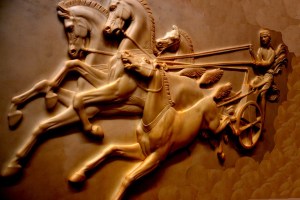
To understand fully the social environment in which the eastern Roman empire operated, we must have some grasp of the unique culture surrounding Constantinople’s Hippodrome in the centuries that followed the disappearance of the Roman empire in the west.  In Byzantium, sport and politics achieved a strange admixture that has no exact historical parallel anywhere else; sport influenced politics, and politics guided sport.  It was a peculiar world, but one that makes sense once we understand the conditions that existed at the time.  We begin with the arena itself.

Continue reading

The Villa Of The Papyri: A Glimpse At A Roman Book Collection

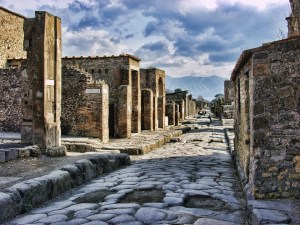
Sometimes an accident of history can preserve records of great value.  As is well-known, Mount Vesuvius in Italy erupted in 79 A.D. entombing the towns of Pompeii and Herculaneum in ash and ejecta.  In the eighteenth century, these sites began to be explored in a random and haphazard manner; one of the villas so discovered turned out to be the residence of a dedicated scholar.

Continue reading

The Wise Sayings Of Al-Muhallab

The Arab military commander Al Muhallab Ibn Abi Sufra (المهلّب بن أبي صفرة الأزدي) was born around A.D. 632, but not much is known of his early life beyond anecdotes.  His biographer Ibn Khallikan tells us on good authority that “His surnames Al-Azdi, Al-Ataki, [and] Al-Basri indicate that he descended from Al-Atik, member of the tribe of Al-Azd, and that he was a native of Basra.”  We are also told that he was distinguished for his generosity and graciousness.  His military prowess was beyond question; he defended the city of Basra so effectively from its enemies that some took to calling the city “The Basra of Al-Muhallab.”

Continue reading

How Were Ancient Books Made And Stored?

There has been surprisingly little information published on how books were made, edited, distributed, and stored in ancient times.  Yet the subject holds real interest for many of us today.  My goal in this short essay will be to summarize how books were made and stored during the Greco-Roman period.  I am confident that readers will quickly appreciate just how much more convenient our access to written information is in comparison to what our remote ancestors had to contend with.

Continue reading

Washington Crosses The Delaware And Attacks

Anyone who thinks the American Revolutionary War was a gentleman’s affair has been seriously misinformed.  We are sometimes given the impression that genteel types in powdered wigs maneuvered this way and that, and at the end of the day, everything was neatly wrapped up as almost a foregone conclusion.  This, however, was not the case, as D.H. Fischer’s Washington’s Crossing makes very clear.  War is war, and there is no way to sugar-coat its effects and costs.

Continue reading